Stop guessing. Start converting. Learn how AI detects buyer intent and delivers smarter messaging that boosts conversions by 65%.
Your website visitor just spent 4 minutes reading your case studies, then jumped to your pricing page, and now they’re checking out your “About” section.
They’re practically screaming “I’m ready to buy!”, but your follow-up email tomorrow will say the same generic “Thanks for visiting” that you send to everyone.
Meanwhile, your competitor’s AI detected those exact behavioral signals and triggered a personalized “Ready to discuss your project?” message within 5 minutes.
Guess who’s getting the sale?
This isn’t about being faster.
It’s about being smarter.
48% of B2B teams using buyer intent data rate their go-to-market strategy as “very successful” because they’ve stopped guessing what customers want and started responding to what customers actually do.
But what exactly is buyer intent data?
Contents
What Is Buyer Intent Data and Why It Matters for Conversions
Every click, scroll, and page visit tells a story about where someone is in their buying journey. But most businesses are deaf to this digital body language.
Think about it. When someone downloads your pricing guide, then returns to read three more blog posts, then checks your Google reviews, that’s not casual browsing.
That’s high-intent research behavior.
Yet most companies respond with the same automated “We’ll be in touch soon” message they send to everyone.
Here’s the game-changer: Businesses using AI to analyze buyer intent signals have seen 65% better engagement with prospects.
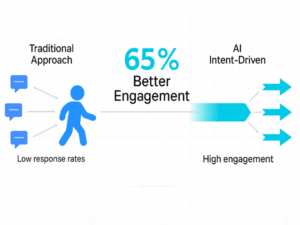
Why? Because they’re matching their message to their prospect’s actual intent level.
But what exactly are these signals, and how do you spot them? Here’s what to look for.
How to Use AI for Lead Scoring
Smart businesses are reading digital body language through four key signals that reveal exactly where prospects are in their buying journey:
1. Website Behavior Tracking for Lead Qualification
The most revealing intent signals come from how people navigate your website. AI can track and score these behaviors automatically:
- Page sequences: The difference between someone who hits “Services” then leaves versus “Services” → “Case Studies” → “Pricing” → “Contact” tells a complete story. Random browsing shows curiosity; structured navigation shows buying intent.
- Content depth engagement: Downloaded your guide? That’s medium intent. They’re educating themselves. Downloaded guide + visited pricing + read testimonials + checked your team page? That’s buying intent. They’re building confidence to purchase.
2. Email Marketing Automation Based on User Engagement
Your email campaigns reveal intent through patterns most businesses ignore:
- Email engagement patterns: Opens every email but never clicks = interested but wrong messaging or timing. Clicks on pricing-related content = ready for sales conversation. Downloads multiple resources = gathering ammunition to justify purchase.
- Social proof seeking behavior: Checking testimonials and reviews = overcoming final objections. Looking at case studies in their industry = visualizing success. Viewing team bios = building trust and rapport.
- Cross-platform tracking: AI can connect email clicks to website behavior. Someone who clicks your email link then spends 15 minutes on your pricing page is showing much higher intent than someone who bounces immediately.
3. Customer Journey Mapping and Sales Funnel Optimization
Timing reveals urgency and decision-making patterns:
- Research intensity patterns: Multiple visits in 48 hours = hot prospect experiencing urgency or external pressure. Spread-out visits over weeks = methodical researcher who needs nurturing, not pressure.
4. Personalized Marketing Messages and Customer Communication
AI learns how different prospect types prefer to receive and process information:
- Communication style preferences: Some prospects need data-heavy, analytical content (detailed ROI calculations, feature comparisons). Others respond to emotional storytelling (transformation stories, vision-casting). AI identifies preference based on content engagement.
- Channel preference detection: Phone vs email vs text vs social media responders show different urgency levels and communication styles. B2B executives often prefer email for initial contact but phone for closing. Service businesses find text works well for appointment reminders but email for educational content.
- Information processing styles: Executive summary types want the bottom line fast—they skim content and focus on headlines and bullet points. Deep-dive researchers want comprehensive details—they read every word and download supplementary materials.
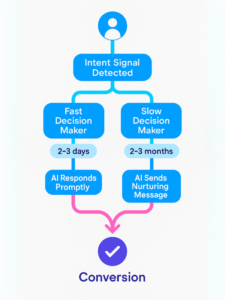
- Decision-making timeline indicators: Some prospects move fast (price shoppers, urgent needs), others take months (committee decisions, budget planning). AI identifies these patterns and adjusts follow-up cadence accordingly.
AI-Powered Marketing Automation for Different Buyer Stages
Once you can read intent signals accurately, you respond with surgical precision. Here’s how to craft messaging that feels like mind-reading:
High-Intent Prospects: Converting Qualified Leads to Sales
Intent signals you’ll see: Pricing page focus, competitor comparisons, implementation timeline questions, urgency indicators like “need this ASAP” language, requests for custom quotes or demos.
Your messaging strategy should focus on:
- Direct value propositions with specifics: Instead of “We help businesses grow,” say “Here’s exactly what you get: 20% increase in lead conversion within 90 days, dedicated account manager, and implementation complete in 2 weeks.”
- Risk mitigation and social proof: These prospects are almost ready but need final confidence. Use guarantees, money-back offers, testimonials from similar businesses, and case studies with measurable results. Address their specific concerns if they’re worried about implementation, lead with your seamless onboarding process.
- Clear, immediate next steps: “Schedule your strategy call today” works better than “Learn more.” Give them exact booking links, phone numbers, or even “Reply YES and I’ll call you in 10 minutes.”
- Urgency and scarcity when appropriate: Limited-time bonuses, “only 3 spots left this month,” or seasonal deadlines (if genuine) can push high-intent prospects over the line.
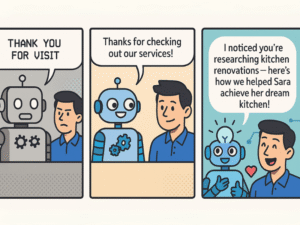
Example messaging: “I noticed you’ve been checking out our pricing and case studies. Based on your business size, I can show you exactly how we helped [similar company] achieve [specific result] in [timeframe]. Are you available for a 15-minute call tomorrow to discuss your specific situation?”
Medium-Intent Prospects: Lead Nurturing and Conversion Strategies
Intent signals you’ll see: Multiple content downloads, social media engagement, comparison research, attending webinars, requesting general information rather than specific pricing.
Your messaging strategy should emphasize:
- Gentle guidance and expertise: “Here’s what to look for in a provider” positions you as a helpful consultant, not a pushy salesperson. Create comparison guides, decision frameworks, and “what questions to ask” content.
- Trust-building transparency: Behind-the-scenes content, process walkthroughs, team introductions, and “day in the life” content helps medium-intent prospects build confidence. Show your methodology, tools, and approach.
- Value-added resources: Offer ROI calculators, assessment tools, free audits, or planning templates. These provide value while collecting more intent data about their specific needs.
Example messaging: “Choosing the right marketing partner is a big decision. I’ve put together a guide covering the 7 questions every business should ask before hiring an agency, including questions you should ask us. Want me to send it over?”
Low-Intent Prospects: Content Marketing and Lead Generation
Intent signals you’ll see: General browsing, educational content consumption, social media follows, newsletter signups, downloading top-of-funnel content like industry reports.
Your messaging approach should prioritize:
- Problem education and awareness: Many prospects don’t fully understand their problem or available solutions. “Here’s what’s really causing your lead generation challenges” helps them recognize issues they didn’t know they had.
- Thought leadership and industry insights: Share trends, predictions, case studies, and insights that position you as an expert worth following. Focus on teaching, not selling.
- Value-first content with no strings attached: Free resources, tools, templates, and guides build goodwill and keep you top-of-mind for when they’re ready to buy.
- Long-term relationship building: These prospects may not buy for months or years, but they might refer others or become customers later. Focus on staying helpful and memorable.
Why AI Marketing Automation Changes Everything
Traditional approach: Blast the same message to everyone and hope it sticks.
Intent-driven approach: Deliver the right message to the right person at the right time.
The difference is dramatic.
Companies using AI-driven personalization see 5-8x increases in marketing ROI because they’re not wasting effort on mismatched messaging.
97% of B2B marketers believe intent data gives them a competitive advantage.
The early adopters are already pulling ahead because they’ve stopped treating all prospects the same.
By 2025, businesses not using intent-driven messaging will seem as outdated as companies still using fax machines in 2010.
The question isn’t whether this technology works (the data proves it does).
The question is: How much longer can you afford to send the wrong message to the right people?
Your Next Move
Your website visitors are broadcasting their buying intentions right now.
They’re telling you exactly when they’re ready to purchase, what concerns them, and how they want to be approached.
Start reading the signals. Start responding with precision. Start transforming random clicks into predictable revenue.
Your competitors are already implementing this.
Your customers are already expecting it.
Transform your business today, because tomorrow, reading digital body language won’t be optional. It’ll be survival.

0 Comments