Turn one-time buyers into loyal customers with a proven follow-up system that boosts retention, referrals, and repeat revenue.
The difference between a $300K service business and a $900K service business isn’t how many new customers they get.
It’s what happens after the first job is done.
Most service business owners are focused on the wrong thing.
They’re constantly hunting for new customers while their past customers, people who already know, like, and trust them, slip away to competitors who simply stay in touch.
Here’s the reality: 61% of small business revenue comes from repeat customers, yet 79% of marketing leads never convert to sales due to lack of proper follow-up.
Most service businesses have no system for turning one-time buyers into loyal, long-term clients.
The result? You’re working twice as hard for half the results.
But what does this actually cost you? Let’s break down the real numbers.
Contents
The Revenue Cost of One-Time Customers
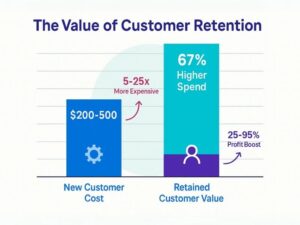
A typical service business spends $200-500 to acquire a new customer through marketing. That customer hires you once, pays their bill, and… disappears into your “completed jobs” folder.
Meanwhile, that same customer will need your services again. And when they do, there’s a 70% chance they’ll hire whoever reaches out first.
Even if your work was better.
The math is brutal:
- Acquiring a new customer costs 5-25x more than keeping an existing one
- Existing customers spend 67% more than new customers on average
- A 5% increase in customer retention can boost profits by 25-95%
But here’s what really stings: most service businesses lose contact with satisfied customers simply because they don’t have a system to stay connected.
Why Customer Retention Is as Critical as Quality Work in 2025
“If your retention is poor, nothing else matters.” — Brian Balfour
“If I do good work, customers will come back.”
This used to be true. Not anymore.
Today’s customers are bombarded with options.
Your competition is actively marketing to them.
And when they need your service again, whether it’s in 6 months or 2 years, they don’t remember your name.
They remember they need help and call whoever they see first.
So how do you break this cycle and start capturing the real value from your customer relationships?
The Complete Guide to Building Your Customer Follow-Up System
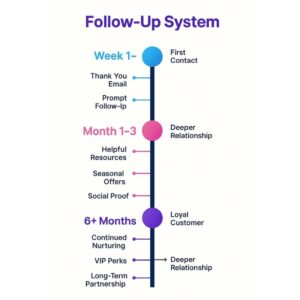
The businesses that consistently turn one-time buyers into long-term customers follow a simple but systematic approach. Here’s the framework:
Foundation Element
Before moving into long-term follow-up, ensure your initial customer experience sets the stage for loyalty:
- Proactively communicate throughout the project. Don’t wait for customers to ask for updates.
Send daily progress photos, explain any delays immediately, and give realistic timelines. “We’re 60% complete and on track to finish Thursday as planned.”
- Constantly check for problems and inconveniences. Ask “Is everything working well for you?” multiple times during the service.
Address small issues before they become big complaints. “I noticed the noise level is high. Let me set up a barrier to reduce disruption.”
- Fix problems immediately, not later. When something goes wrong, drop everything to make it right.
Customers remember how you handle problems more than they remember the problems themselves.
- Make every effort to ensure an easy transaction. 80% of customers say that convenience, speed and knowledgeable help are important elements as they transact with any business.
Phase 1: Post-Service Customer Follow-Up (Week 1-2)
“Onboarding is the first battle in retention. 86% of people say they’d be more likely to stay loyal to a business that invests in welcoming and educating them after purchase.” — Simon Grant
Week 1 – The Thank You Check-In: Don’t just disappear after getting paid.
Send a quick message thanking them and asking if they have any questions about the work.
This simple touch point shows you care about their satisfaction, not just the payment.
Week 2 – The Quality Assurance Follow-Up: Follow up to ensure everything is working perfectly.
For home services, this might be “Making sure that new HVAC system is keeping you comfortable.” For business services, “Checking to see how the new website is performing for you.”
This isn’t just good service. It’s positioning yourself as someone who stands behind their work.
Phase 2: Customer Relationship Building (Month 1-3)
Month 1 – The Educational Touch: Share something valuable related to your work.
A landscaper might send tips for winter lawn prep.
A web designer might share simple maintenance tips.
This keeps you top-of-mind while providing genuine value.
Month 3 – The Seasonal Check-In: Reach out based on when they might need your services again. HVAC companies do this naturally with seasonal tune-ups.
But every service business has cycles.
Restaurants need deep cleaning before busy seasons, and offices need IT support before major software updates.
Phase 3: Long-Term Customer Retention Strategy (6+ Months)
Every 6 Months – The “How’s Everything Going?” Message: A simple check-in that opens the door for additional services.
This is where you discover that a happy roofing customer also needs their gutters cleaned, or that satisfied accounting client is opening a second location.
Annual – The Relationship Review: Look back at what you’ve accomplished together and discuss what’s coming up.
This positions you as a trusted partner, not just a vendor.
This system works perfectly but you can’t manually manage relationships at scale.
That’s why the most successful businesses automate the heavy lifting.
How to Automate Customer Follow-Up Systems
Here’s the reality: If your follow-up system depends on you remembering to do it, it won’t happen consistently.
The most successful service businesses automate 80% of this process:
Automated Text Messages That Convert
Text messages have the highest open rates (98%) and fastest response times. Here’s how to use them effectively:
Immediate Follow-Ups (Auto-triggered after job completion):
- “Thanks for choosing us for your kitchen remodel! Any questions about the new countertops? – [Your Name]”
- “Hope you’re loving the new flooring. Any concerns we should address? Just text back.”
Seasonal/Maintenance Reminders:
- “Winter’s coming. Time to think about furnace maintenance. Reply YES to schedule.”
- “Spring cleaning season! Ready to freshen up those carpets? Text CLEAN for a quote.”
Value-First Check-Ins (Every 3-6 months):
- “Saw the storm hit your area. Everything okay with the roof we worked on?”
- “How’s that new HVAC system treating you? Any issues before the warranty checkup?”
Email Sequences That Build Relationships
Email works best for educational content and detailed follow-ups. Set up these automated sequences:
Monthly Value Emails:
- Industry tips relevant to their service
- Maintenance checklists and seasonal prep guides
- Case studies of similar projects with before/after photos
Milestone Emails (Triggered by dates):
- 30-day: “How’s everything working?” with satisfaction survey
- 6-month: “Time for a maintenance review?” with scheduling link
- Annual: “It’s been a year…” with loyalty discount
Reactivation Sequences:
- “We miss you!” campaigns for 12+ month dormant customers
- “What’s new in your business?” check-ins with helpful resources
Strategic Phone Calls
High-Value Customer Calls (Quarterly):
- Automated calendar invites every 90 days
- Pre-call emails with account summary and agenda
- Focus: Review past work, discuss upcoming projects
Annual Reviews (Commercial clients):
- Automatic yearly meeting requests
- Performance reports sent beforehand
- ROI analysis and contract renewal discussions
Referral Follow-Ups:
- 60-day trigger: “Know anyone else who could use our services?”
- utomated referral tracking and thank you rewards
- Post-referral satisfaction checks with both parties
That said, it’s also important to avoid common mistakes that can leave customers feeling ignored or unhappy. Let’s go over a few of those next.
Customer Follow-Up Mistakes That Hurt Your Business
Mistake 1: Making it all about you: Bad: “We’re running a special on window cleaning!” Good: “With spring arriving, now’s the perfect time to let more light into your home. Need those windows cleaned?”
Mistake 2: Following up too aggressively: You’re not trying to be annoying. Space out your touches and always provide value.
Mistake 3: Generic messaging “Dear valued customer” emails go straight to trash. Reference specific work you did for them.
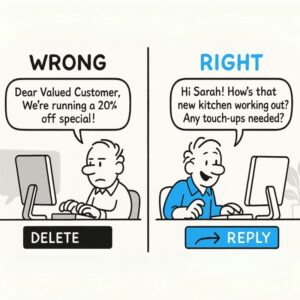
Mistake 4: Forgetting to ask Don’t just provide value. Create opportunities for them to hire you again. “Reply if you’d like a quote” or “Call us if you’re ready to schedule.”
The key is making it feel personal, not automated. Your customers should feel like you’re thinking about them, not that they’re in a marketing funnel.
Before You Go….
Your past customers already trust your work quality and are happy to hire you again.
You just need to build a system to follow up consistently and reach out to them when they need your services.
At Automate My Biz, we handle this entire follow-up process automatically.
Our AI sends thank-you messages, schedules the quality check-ins, delivers seasonal reminders, and tracks every interaction, so you never lose touch with a satisfied customer again.
While you’re focused on delivering excellent work, we’re making sure your past customers remember to call you first when they need help.
Ready to see what consistent customer follow-up could be worth to your business?
Use our Communication Automation ROI Calculator to estimate your potential return from implementing a systematic follow-up process.

0 Comments